Pages

Pages

Sunday, July 19, 2026

Lost in Late 18th and Early 19th centuries...Lessons Learned, What He did right©


Author’s note -- I hope that you enjoy learning from this resource!  To help me to continue to provide valuable free content, please consider showing your appreciation by leaving a donation HERE.  Thank you and Happy Trails!


Imagine it is in the middle of winter of some year between 1794 and 1814, the exact year doesn’t really matter.  You’ve walked all day, become turned around, bewildered even, in a giant frozen swamp, on the edge of the American Old Northwest Frontier.  It’s bitterly cold, and the Sun is going down.  It will be dark soon, and it’s going to get colder, much colder.  Can you do better than the ‘Lost Traveller’ did?  He survived to tell the tale, would you?


We already discussed what he did wrong when he realized he had left the trail, but did he get anything right?


Why yes!  Yes, he did, he didn’t panic.  That’s HUGE!  When he realized it was almost dark and that he had become bewildered, he didn’t lose his heads, he didn’t let fear take over and become lost.  Instead, he found shelter and prepared to wait out the night.


What he did right...


He and the Little Dutchman found shelter next to an uprooted hemlock tree that was lying perpendicular to the wind1.  The trunk and the root-ball would function as a windbreak, preventing wind chill, and keeping the leeward, generally snow free. 


Next, they built a bough bed of hemlock boughs from the fallen tree, by piling branches on the ground, next to the trunk, to insulate themselves from cold, heat-stealing ground.


But by the time they had finished clearing the ground and building their bed, it was growing dark and getting increasingly cold.  They needed more than a windbreak and a ground bed to keep from freezing to death during the night, with the temperatures continuing to drop; they needed a fire.  But, sadly, neither of them had remembered to slip a tinder box into their pockets.  They had almost given up hope, when fortunately, the ‘Lost Traveller’ remembered that he had accidentally charred his handkerchief the night before, rolling it up tight and stuffing it into one of his pockets to smother it, and that he had a large jack knife and a gun flint in another pocket.  This is another example of not panicking and of improvising, adapting, and overcoming in a survival situation, and of putting the ‘O’, for ‘organize’, in S.T.O.P. into practice.


Now that they had the means of making a spark, they turned to preparing for a fire, by clearing the snow, building a fire base and gathering tinder, kindling and fuel wood.  You always want to have plenty of tinder, kindling and fuel wood before you light your fire, because you don’t want your newborn fire to expire from a lack of fuel, while you a searching for more, but a pile as high as your head is a pretty good start. 


Now that they had a pile tinder, kindling and fuel; the ‘Lost Traveller’ had to get the charred handkerchief to catch a spark, so that he could light the kindling pile.  Luckily, he was able to spark a fire.


The tale of the ‘Lost Traveller’ doesn’t mention the type of fire that he built.  Because he lacked an ax or saw, he probably built a Long or Hunter’s Fire, which is fire lay of two parallel logs with a fire built between them.   In an emergency this fire is easily built by laying whole logs parallel to each other, but to keep it going overnight, you will need to place a third log on top of them.


You will always need more wood than you think you will, especially in the winter when temperatures are low, and a pile as high as your head will burn up fast.  I’ve always heard, and always taught, that you should get three times as much as you think you will need and then get a little bit more, just in case, to keep your fire burning all night long.  Also, it becomes difficult to safely find wood once the Sun goes down. 


In the morning, the sun rose, and our traveler was able to determine north, south, east and west and navigate back to the banks of the Genesee river, the village of Hartford, and safety.


For more on the ‘Lost Travellers’ tale of survival read “Lost in the Great Tonewanta Swamp, 1796! Part One©, HERE.


I hope that you enjoy learning from this resource!  To help me to continue to provide valuable free content, please consider showing your appreciation by leaving a donation HERE.  Thank you and Happy Trails!


I hope that you continue to enjoy The Woodsman’s Journal Online and look for me on YouTube at BandanaMan Productions for other related videos, HERE.  Don’t forget to follow me on both The Woodsman’s Journal Online, HERE, and subscribe to BandanaMan Productions on YouTube.  If you have questions, as always, feel free to leave a comment on either site.  I announce new articles on Facebook at Eric Reynolds, on Instagram at bandanamanaproductions, and on VK at Eric Reynolds, so watch for me.


That is all for now, and as always, until next time, Happy Trails!


Sources


Beard Adelia Belle; “Woodcraft for Outdoor Boys and Girls”, The Washington Reporter, February 11, 1920, page 5, https://books.google.com/books?id=SjFeAAAAIBAJ&pg=PA5&dq=%22without+maTCHES%22+1920&article_id=6504,6160930&hl=en&sa=X&ved=2ahUKEwjo5feX6aeVAxXYDHkGHYfXELsQ6AF6BAgJEAM#v=onepage&q=%22without%20maTCHES%22%201920&f=false, accessed June 27, 2026


Department of the Army, Basic Cold Weather Manual, FM 31-70, April 12, 1968, [Paladin Press, Boulder, CO, 1974], page 61


Jessup, Elon; ‘Camping Hints, Ground Beds’, Field & Stream, July 1927, page 63 to 64, https://www.google.com/books/edition/Field_and_Stream/oJ-OgRGKwpYC?hl=en&gbpv=1&dq=bough+bed&pg=RA2-PA64&printsec=frontcover, accessed July 17, 2026


Moses, Thomas; “The Lost Traveller”, The Analectic Magazine, Volume 4, [published by Moses Thomas, Philadelphia, PA; 1814], page 158, https://www.google.com/books/edition/The_Analectic_Magazine/pu84AQAAMAAJ?hl=en&gbpv=1&dq=%22the+lost+Traveller%22+analectic+magazine+1814&pg=PP13&printsec=frontcover, accessed June 27, 2026


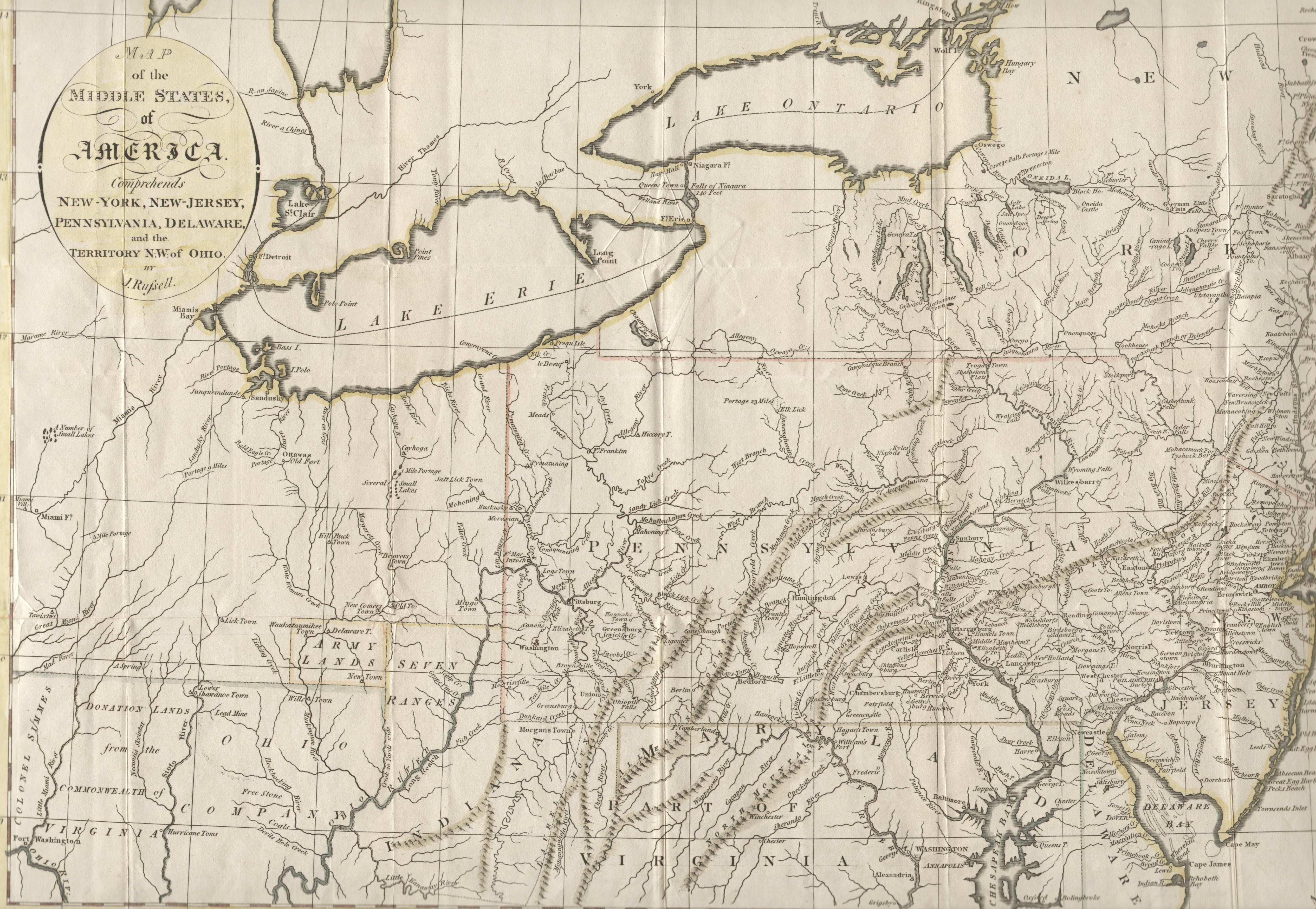
Russell, J.; “A Map Of The Middle States, Of America”, 1794 http://www.mapsofpa.com/18thcentury/1794russell.jpg, accessed June 27, 2026


Sharp, Hal; “Sportsman’s Digest: Start a Fire with Flint and Steel”, The News-Dispatch, September 18, 1972, page 5, https://books.google.com/books?id=02BVAAAAIBAJ&pg=PA5&dq=%22start+a+fire+with+flint+and+steel%22+1972&article_id=3452,5991692&hl=en&sa=X&ved=2ahUKEwjvnvTg7qeVAxUvpIkEHfdCPU8Q6AF6BAgIEAM#v=onepage&q=%22start%20a%20fire%20with%20flint%20and%20steel%22%201972&f=false, accessed June 27, 2026


The American Mountain Men; “Flint and Steel Steel Char Flint”,  https://americanmountainmen.org/wp-content/uploads/2019/09/TLR-FIRE-2019-APRIL-28.pdf, accessed June 27, 2026


Wallace, A. F.; ‘Getting Lost’, Fur News and Outdoor World, May 1915, page 13, https://www.google.com/books/edition/Fur_News_and_Outdoor_World/ukQAAAAAMAAJ?hl=en&gbpv=1&dq=log+windbreak&pg=RA7-PA13&printsec=frontcover, accessed July 17, 2026


Wikimedia, “1821 A new map and profile of the proposed canal from Lake Erie to Hudson River in the State of New York”, from the New York Public Library, 1821, https://commons.wikimedia.org/wiki/File:1821_A_new_map_and_profile_of_the_proposed_canal_from_Lake_Erie_to_Hudson_River_in_the_State_of_New_York,_from_the_New_York_Public_Library_-_510d47da-f059-a3d9-e040-e00a18064a99.jpg, accessed July 11, 2026


Wikimedia, “Glacial Lake Tonawanda, showing the movement of Niagara Falls”, By Matthew Trump, May 1, 2004, https://commons.wikimedia.org/wiki/File:Wpdms_usgs_photo_lake_tonawanda.jpg, accessed July 11, 2026


Sunday, July 12, 2026

Lost in Late 18th and Early 19th centuries...Lessons Learned, What He did Wrong©


Author’s note -- I hope that you enjoy learning from this resource!  To help me to continue to provide valuable free content, please consider showing your appreciation by leaving a donation HERE.  Thank you and Happy Trails!


Imagine it is in the middle of winter of some year between 1794 and 1814, the exact year doesn’t really matter.  You’ve walked all day, become turned around, bewildered even, in a giant frozen swamp, on the edge of the American Old Northwest Frontier.  It’s bitterly cold, and the Sun is going down.  It will be dark soon, and it’s going to get colder, much colder.    Can you do better than the Lost Traveller did?  He survived to tell the tale, would you?


In 1820, the Great Tonawanda Swamp covered about 25,000 to 40,000 acres (roughly 40 to 60 square miles).  It was the remains of the mostly dried up corpse of Glacial Lake Tonawanda, which was filled by Lake Erie and emptied into Glacial Lake Iroquois. 


A massive, impassable wetland stretching across the northern parts of Genesee and Orleans counties, in New York state, which included within it today, the towns of Alabama, Oakfield, Elba, Barre, and Clarendon.  It measured roughly 15 to 20 miles long and several miles wide.  The swamp was a major geographic barrier during the early 1800s and was covered with thick, wet woods, deep mud, and dense vegetation, making it nearly impossible to cross or farm.  Early pioneer records note the swamp was home to dangerous wildlife, including large populations of wolves.  Being lost here, especially in the winter, was no joke.  So what did the ‘Lost Traveller’ do wrong; and what did he do right...let’s find out.


What he did wrong...


Our ‘Lost Traveller’ and his companion entered the wilderness without a compass, means of creating fire, food or any spare clothing, because they assumed they couldn’t possibly get lost.  If they had remembered to bring a compass and knew that their path would generally be to the west to north-west, then perhaps they wouldn’t have lost their way. 


Even without a compass, if they had only known that in the winter, near the solstice, on December 21, six days after they set out, the sun rises in the southeast (30° to 32° south of due east, actually), before crossing through the southern hemisphere, and then setting in the southwest (30° to 32° south of due west), perhaps they would have been able to find their way from the twin villages of Hartford and Canawagus, New York, which today are known as Avon, New York, to the Niagara Falls area without a problem. 


Instead they walked for some 15 miles, over an apparently unbroken track through the forest, following blazes, trusting to luck and hoping for the best.  December 15th is one of the shortest days of the year, with the sun rising at about 7:30 am and setting again about 4:30 pm at this latitude; that means there is only a total of about nine hours of daylight.  Since the snow depth was low, at about six inches (15 cm) deep, and they had no baggage, they must have been walking at 2 miles per hour (3.2 kph).  This means that they walked for some seven and half hours before they lost the trail.


When they realized that they had left the trail, they should have S.T.O.P.ped, and built a camp for the night, or returned by following their tracks to the correct trail.  But they didn’t, instead they spent the next hour and half or so wandering the frozen swamp, before the setting sun forced them to stop, set up camp and go no farther.


As it was, they were bewildered, not yet lost, but without any food, or extra dry clothes which was their baggage; as the temperatures plummeted, becoming bewildered was truly becoming an emergency.


So, now we know what the ‘Lost Traveller’ did wrong.  To recap, here is what he should have done.


Before heading into the wilderness always carry a compass.  Even if you or your guide know how to get from point A to point B, carry a compass for emergencies.  Constantly check your compass to make sure you are still on track.


Learn to tell basic directions from the position of the Sun, just in case.


Always have the means to start a fire with you, on your person, at all times.  This includes tinder as well as the means to light it.


Bring extra dry clothes, water and food, just in case.


S.T.O.P when you first become ‘bewildered’, don’t keep moving.


If you manage to go off trail, follow your foot-steps and back track to where you know where you are, DON’T wander and try a shortcut.  Like a free lunch, there is no such thing as a shortcut.


Plan on setting up camp at least two hours before local sunset (when the sun goes down behind the trees, the nearest hill, ridge, etc.).


But not thinking that it could happen to them was their biggest mistake.


But what did he do right?  To find out, tune in next week and read “Lost in Late 18th and Early 19th centuries...Lessons Learned, What he did right©


For more on the ‘Lost Travellers’ tale of survival read “Lost in the Great Tonewanta Swamp, 1796! Part One©, HERE.


I hope that you enjoy learning from this resource!  To help me to continue to provide valuable free content, please consider showing your appreciation by leaving a donation HERE.  Thank you and Happy Trails!


I hope that you continue to enjoy The Woodsman’s Journal Online and look for me on YouTube at BandanaMan Productions for other related videos, HERE.  Don’t forget to follow me on both The Woodsman’s Journal Online, HERE, and subscribe to BandanaMan Productions on YouTube.  If you have questions, as always, feel free to leave a comment on either site.  I announce new articles on Facebook at Eric Reynolds, on Instagram at bandanamanaproductions, and on VK at Eric Reynolds, so watch for me.


That is all for now, and as always, until next time, Happy Trails!


Sources


Beard Adelia Belle; “Woodcraft for Outdoor Boys and Girls”, The Washington Reporter, February 11, 1920, page 5, https://books.google.com/books?id=SjFeAAAAIBAJ&pg=PA5&dq=%22without+maTCHES%22+1920&article_id=6504,6160930&hl=en&sa=X&ved=2ahUKEwjo5feX6aeVAxXYDHkGHYfXELsQ6AF6BAgJEAM#v=onepage&q=%22without%20maTCHES%22%201920&f=false, accessed June 27, 2026


Department of the Army, Basic Cold Weather Manual, FM 31-70, April 12, 1968, [Paladin Press, Boulder, CO, 1974], page 61


Mackenzie, Eneas; An Historical, Topographical, and Descriptive View of the United States of America, [Mackenzie and Dent, London, 1819], page 508, https://books.googleusercontent.com/books/content?req=AKW5Qace32RK0rSk2jqxttZuRyh11-RXIcfKDUiiKI2LqpGDtENvzLmzCCnEHG_Ev8nqEVAcPJyp6APwbtdoTd0QhajdZzGAE-3hJKED9cWKNaBzt0wWnJfE80g4l-VQ6o46l1Sm1L9ZVjX7lZOeTTYPR42JEQXYLiWNzRTG-qafk12l5BpfurWXv4XYcwwoY4bcwF1loxkLYwYF8IJeFKS9FJy8JZNpop9CVwTynkDnYf5iEp4r4L8MgcBpeL6BFU4cbGfm7YaWVeL2upttQe2jNeXvAJCtHnn6YrwU1sPccngWgj9rYqI, accessed July 11, 2026


Moses, Thomas; “The Lost Traveller”, The Analectic Magazine, Volume 4, [published by Moses Thomas, Philadelphia, PA; 1814], page 158, https://www.google.com/books/edition/The_Analectic_Magazine/pu84AQAAMAAJ?hl=en&gbpv=1&dq=%22the+lost+Traveller%22+analectic+magazine+1814&pg=PP13&printsec=frontcover, accessed June 27, 2026


Russell, J.; “A Map Of The Middle States, Of America”, 1794 http://www.mapsofpa.com/18thcentury/1794russell.jpg, accessed June 27, 2026


Sharp, Hal; “Sportsman’s Digest: Start a Fire with Flint and Steel”, The News-Dispatch, September 18, 1972, page 5, https://books.google.com/books?id=02BVAAAAIBAJ&pg=PA5&dq=%22start+a+fire+with+flint+and+steel%22+1972&article_id=3452,5991692&hl=en&sa=X&ved=2ahUKEwjvnvTg7qeVAxUvpIkEHfdCPU8Q6AF6BAgIEAM#v=onepage&q=%22start%20a%20fire%20with%20flint%20and%20steel%22%201972&f=false, accessed June 27, 2026


The American Mountain Men; “Flint and Steel Steel Char Flint”,  https://americanmountainmen.org/wp-content/uploads/2019/09/TLR-FIRE-2019-APRIL-28.pdf, accessed June 27, 2026


Wikimedia, “1821 A new map and profile of the proposed canal from Lake Erie to Hudson River in the State of New York”, from the New York Public Library, 1821, https://commons.wikimedia.org/wiki/File:1821_A_new_map_and_profile_of_the_proposed_canal_from_Lake_Erie_to_Hudson_River_in_the_State_of_New_York,_from_the_New_York_Public_Library_-_510d47da-f059-a3d9-e040-e00a18064a99.jpg, accessed July 11, 2026


Wikimedia, “Glacial Lake Tonawanda, showing the movement of Niagara Falls”, By Matthew Trump, May 1, 2004, https://commons.wikimedia.org/wiki/File:Wpdms_usgs_photo_lake_tonawanda.jpg, accessed July 11, 2026


Sunday, July 5, 2026

Happy 250th Birthday America!©


Author’s note -- I hope that you enjoy learning from this resource!  To help me to continue to provide valuable free content, please consider showing your appreciation by leaving a donation HERE.  Thank you and Happy Trails!


There is no article this week, because I am busy celebrating America’s 250th birthday!  I’m going to visit Old Fort Niagara to commemorate the 267th anniversary celebration of the Siege of Fort Niagara before marching in a Fourth of July Parade this evening.


Be safe with your fireworks, no unnecessary trips to the emergency room.


Don’t forget to come back next week and read more in our Summer of 1776 series.


I hope that you enjoy learning from this resource!  To help me to continue to provide valuable free content, please consider showing your appreciation by leaving a donation HERE.  Thank you and Happy Trails!


I hope that you continue to enjoy The Woodsman’s Journal Online and look for me on YouTube at BandanaMan Productions for other related videos, HERE.  Don’t forget to follow me on both The Woodsman’s Journal Online, HERE, and subscribe to BandanaMan Productions on YouTube.  If you have questions, as always, feel free to leave a comment on either site.  I announce new articles on Facebook at Eric Reynolds, on Instagram at bandanamanaproductions, and on VK at Eric Reynolds, so watch for me.


That is all for now, and as always, until next time, Happy Trails!