Author’s note – for more on Dr.
Blank’s adventure, read “A Ranger’s Story, 1756 ©”, HERE and “The Peculiar Case of Dr.
Blank, Part One©”, HERE.
An excerpt from the biography of Dr.
John Manning Jr., the son of Dr. John Manning.
Earlier, we discovered that “Dr. Blank” was none other
than Dr. John Manning, a man who lived a long, full, adventurous, and rather
eccentric life! As the “New
Contributor” wrote “The old man was, as usual, in his private sanctum ...
It was a long narrow room, ... On one side was a little counter, with a pair of
rusty scales hung over it, and behind a number of shelves of dusty vials and
gallipots ... Over head hung bunches of parching-corn, and various natural
curiosities, while some antediluvian pictures garnished the walls”.

I believe that we have proved that Dr. John Manning was the
mysterious “Dr. Blank”, but questions remain, such as, did he serve with
Colonel Ephraim Williams’ Third Massachusetts Regiment of Provincials “that in 1755 essayed
to take Crown Point from the French” and fight at the Battle of Lake George, and later enlist with
“Rogers'
company of Rangers”? This remains to be seen. What can we use to prove, or disprove Dr. Manning’s
tale, and discover if it is true, or simply a good piece of historical fiction,
a tall tale, foisted upon “New Contributor”.
But did he
serve? Direct evidence...
According to the “New Contributor”,
we know that the hero of our adventure...
“At nineteen years of age, he joined the army of the
provinces, that
in 1755 essayed
to take Crown Point from the French.”
“...marched to
the lakes with Colonel Ephraim Williams... The
doctor fought under his command at Lake George, on the
memorable eighth of September”
“The next year he joined Rogers'
company of Rangers, and
was
stationed with a party of them at Fort Ann, not far from where Whitehall
now stands”.
Assuming we correctly identified “Dr. Blank” as Doctor John
Manning, let’s take these claims one by one, and see if there is any direct
written evidence to support them.
“At nineteen
years of age, he joined the army of the provinces...”
The “Beating Orders” for the enlistment of Massachusetts Provincials, required
recruits to be between the ages of eighteen and thirty-five at the time of
enlistment, only those who born before 1737 and after 1720, would have been
able to enlist. Since our hero claimed
to be 19 years of age in 1755, the John Manning we are looking for would have had
to be born around 1736.

published
in 1828, Dr. John Manning was born in November of 1737. However, William Henry Manning wrote in the Genealogical
and Biographical History of the Manning Families, 1902, that he was
baptized on November 12, 1738. The dates
are inconsistent and confusing, but if the oldest reference is used in
preference to the latest1, then Dr. John Manning would have been 17
years and 7 months old in the spring of 1755 if he enlisted for the campaign
against Crown Point. While nineteen is
not the same as almost eighteen, it is possible that he lied about his age to
enlist, in any case, his age in 1755, was in the right range for him to have
been the hero of our story.
“...marched to
the lakes with Colonel Ephraim Williams... The doctor fought under his command...”
Colonel
Ephraim Williams raised and commanded the ten companies of the Third
Massachusetts Regiment of Provincials, who were recruited from the western
parts of Massachusetts; while Colonel Moses Titcomb commanded the Second
Massachusetts, raised from the eastern parts of the Colony, and Colonel Timothy
Ruggles, the First Massachusetts, which was recruited from south and central
Massachusetts. Additionally, Col. Williams
was second in command of the entire expedition against Crown Point, subordinate
to General William Johnson, and commanded Burke's and Rogers' Rangers, as well
as his own regiment, according to Author Wyllis Wright.2
Thomas
Jefferys, “A map of the most
inhabited part of New England”, 1774, showing the locations of Ipswich, MA and
Newmarket, NH 
Our
hero claimed to have “marched to the lakes with Colonel Ephraim Williams...”
and “fought
under his command”. This
is a rather ambiguous statement, since it could mean he was in the company directly
commanded by Col. Williams, or in one of the other eleven companies that the Colonel was in command of, or even
perhaps, just that he was a part of the 1755 Expedition against Crown Point!
We
know, according to the American Medical Biography, that Dr. John Manning
was born and grew up in Ipswich, Massachusetts, where his father Dr. Joseph
Manning had a successful practice. At
the age of 22, he “commenced
practice at Newmarket, New Hampshire, in 1759”3 However, “He
returned to Ipswich in 1760”, to continue his practice of medicine.
To
date, I have not been able to find any written records that showed
that Doctor
John Manning lived anywhere other than Ipswich, before 1759, when he moved to
Newmarket, so it will have to be assumed that he resided in Ipswich until then. If he was part of the regiment commanded by
Col. Williams, then it is likely that he would have been part of Colonel Moses
Titcomb’s Second Massachusetts Regiment of Provincials, since they were
raised from the eastern parts of Massachusetts.
Again
unfortunately, I have not been able to find any direct written evidence for the
enlistment of John Manning from Ipswich, in the muster records of the companies
in either the First, Second or Third
Massachusetts Regiment of Provincials4. Also, to date I have been unable to locate a
muster roll for Captain John Burke’s company of Rangers. So, it appears that the door of direct
evidence along this line of reasoning has been closed.
“The next year
he joined Rogers' company of Rangers...”
During the summer and fall of 1755, the New Hampshire
Provincials, among others, had acted as scouts for the Colonial Army, as the year
ended the New Hampshire men were at the end of their enlistments and wanted to
return home. Because of this Captain
Rogers was given permission “to inlist at
Large & that such Inlistments should be amounted as part of their
Quota & the Genl. was desired to detach the rest out of their
men”.
This is confirmed by Seth Pomeroy’s journal entry for October
6th, 1755, where he wrote “...Except Capt. Simes [William Simes] & Capt.
Rogers which are to Stay here at ye fort [Fort Edward] all Winter with each of them a company of
volentiers yt they think they Can raise for that purpose...”
Captain Rogers, himself noted the same thing on December 19, 1755, when
he wrote that “It was adjudged, both by Gen. Johnson and these Commissioners, that it
would be of great use to leave one company of woodsmen or rangers under my
command, to make excursions towards the enemies forts during the winter”.5
I
believe that James Minot’s phrase “to inlist at Large”
meant that
Rogers, and most likely Captain Simes as well, were allowed to
enlist volunteers from the other colonies’ soldiers whose enlistments had or
were ending. If so, it is possible that “Dr.
Blank” could have enlisted in Captain Rogers’ Rangers during the winter of
1755/56. But I have been unable to find
a record of anyone named John Manning in Burt G. Loescher’s, Rogers Rangers
Pvts. Roster, 1755-1761, so again the door of
direct evidence has been slammed shut in our face!
In the end, we are left with one hit and two misses for
direct evidence. Doctor John Manning was
in the correct age bracket to enlist and was about 19 years of age in 1755, but
there is unfortunately no written evidence to show that he did. Assuming that we have correctly identified
Doctor John Manning as “Dr. Blank”, we are left with several questions,
such as were the original records lost or scattered by the winds of time, did
he enlist using a false name and if so, what was it and why, OR did he
simply lie and tell a tall tale to “New Contributor”, which changes this
from a case of a missing identity to a case of stolen valor!
Personally, I found the details in “The Ranger’s Adventure”,
for the most part, compelling and consistent with what I know of the wilderness
battlefields of the Lake George area during the French & Indian War, and personally
I would like to believe that it is a true forgotten tale from a time long ago, so don’t forget to come back next week and read “The Peculiar Case of Dr.
Blank, Part Three ©”, where we will talk about circumstantial evidence,
inconsistencies, and things that ring true in “The Ranger’s
Adventure”.

I
hope that you continue to enjoy The Woodsman’s Journal Online and look for me
on YouTube at BandanaMan Productions for other related videos, HERE. Don’t forget to follow me on both The
Woodsman’s Journal Online, HERE,
and subscribe to BandanaMan Productions on YouTube. If you have questions, as always, feel free
to leave a comment on either site. I
announce new articles on Facebook at Eric Reynolds, on Instagram at
bandanamanaproductions, and on VK at Eric Reynolds, so watch for me.
That
is all for now, and as always, until next time, Happy Trails!
Notes
1 There
were several mathematical errors in William Henry Manning’s biography of the
Manning family and because of this and because James Thatcher was writing at a
time closer to Dr. John Manning’s life, I am going to assume his dates are
correct.
2 From
Colonel Ephraim Williams, A Documentary Life, by Wyllis Wright, (1970). Berkshire County Historical Society, Pittsfield,
MA, page 4
3 Newmarket,
New Hampshire, was a small town on the Lamprey River, about 30 miles (48 km)
northwest of Ipswich, near the New Hampshire, Maine border.
4
I did find an instance of a John Manning who was the correct age and for whom
we did have direct written evidence that he served, and that would be John
Manning of Lancaster, Massachusetts, who enlisted in
Because this John Manning
was from Lancaster and because, according to the History of the Town of
Lancaster Massachusetts, by Rev. Abijah P. Marvin, on page 253, that the
Lancaster men, including John Manning, “...returned
home by Albany in the early winter of 1756” we know that this is
not our hero who enlisted in Roger’s Rangers in early 1756.
5 The
Annotated and Illustrated Journals of Major Robert Rogers, Timothy J.
Todish
Sources
“Agawam Tribe”, Access Genealogy, [©
2023 Access Genealogy], https://accessgenealogy.com/massachusetts/agawam-tribe.htm, accessed April 7, 2023
Essex Institute; Historical
Collections of the Essex Institute, Volume 4, [G. M. Whipple & A. A.
Smith, Salem, 1862], page 166, https://books.google.com/books?id=WG8MAAAAYAAJ&pg=PA166&dq=%22john+manning%22+ipswich&hl=en&newbks=1&newbks_redir=0&sa=X&ved=2ahUKEwjn6cfhuKz-AhUqGVkFHev7CjA4ChDoAXoECAcQAg#v=onepage&q=%22john%20manning%22%20ipswich&f=false,
April 17, 2023
From The London Gazette
Extraordinary, Whitehall, October 10; The Whitehall Evening Post, or London
Intelligencer, Thursday October 30 to Saturday November 1, 1755. No. 1511, https://books.google.com/books?id=ltlMAAAAcAAJ&newbks=1&newbks_redir=0&hl=en,
accessed April 27, 2023
Hinton, John; “A new and accurate map of the colony of Massachusetts Bay, in North America, from a
late survey”, [J. Hinton, London, 1780], https://www.loc.gov/resource/g3760.ar088100/?r=0.209,0.173,0.627,0.23,0
“Historic maps of
Ipswich”, [Historic Ipswich, ©2023 Gordon Harris], https://historicipswich.org/maps-of-historic-ipswich/,
accessed April 7, 2023
Holmes, Abiel, D. D.; American
Annals, [Cambridge, Massachusetts, 1813], page 229, https://books.google.com/books?id=c9sRAAAAYAAJ&pg=PA222&dq=%22Abiel+Holmes%22+%22American+Annals%22+1813+agawam&hl=en&newbks=1&newbks_redir=0&sa=X&ved=2ahUKEwj59qPl0J3-AhUQD1kFHQzoBs4Q6AF6BAgEEAI#v=onepage&q=%22Abiel%20Holmes%22%20%22American%20Annals%22%201813%20agawam&f=false, accessed April 9, 2023
“Ipswich in the 17th
Century”, [Historic Ipswich, ©2023 Gordon Harris], https://historicipswich.org/ipswich-history/the-17th-century/,
accessed April 7, 2023
Lepionka, Mary Ellen;
“Who Were the Agawam Indians, Really?”, [Historic Ipswich, ©2023 Gordon Harris], https://historicipswich.org/2021/04/21/who-were-the-agawam-indians-really/,
accessed April 7, 2023
Loescher, Burt; Rogers
Rangers Pvts. Roster, 1755-1761, page 187, https://nyheritage.contentdm.oclc.org/digital/collection/p16694coll98/id/603/rec/3,
accessed April 29, 2023
Lossing, Benson J.; Pictorial Field-Book of
the Revolution, Vol. I, [Harper and Brothers, New York, NY, 1851], page 115, [Produced by the Florida Center for
Instructional Technology, © 2009 College of Education, University of South
Florida], https://etc.usf.edu/maps/pages/8100/8139/8139.htm, accessed April 18, 2023
Manning,
William Henry, The
Genealogical and Biographical History of the Manning families of New England
and Descendants, [The Salem Press, Salem, Massachusetts, 1902], pages
11-12, 716-719, https://archive.org/details/genealogicalbiog00mann,
accessed April 7, 2023
National
Park Service, U.S. Department of the Interior, “Jacques Legardeur de
Sainte-Pierre”, https://www.nps.gov/people/captain-jacques-legardeur-de-sainte-pierre.htm,
accessed April 27, 2023
New-York
Mercury,
Num. 200, June 7, 1756, https://books.google.com/books?id=WcdFAAAAIBAJ&pg=PA1&dq=battle+of+lake+george&article_id=5163,143158&hl=en&sa=X&ved=2ahUKEwjFz4Gv7cr-AhXYm4kEHSOSB3AQ6AF6BAgHEAI#v=onepage&q=battle%20of%20lake%20george&f=false, accessed April 27, 2023
Representative
Men and Old Families of Southeastern Massachusetts, Vol. III, [J.H Beers & Co., Chicago, 1912], Page
1612, https://books.google.com/books?id=GHIWAAAAYAAJ&pg=PA1612&dq=%22john+manning%22+ipswich&hl=en&newbks=1&newbks_redir=0&sa=X&ved=2ahUKEwjn6cfhuKz-AhUqGVkFHev7CjA4ChDoAXoECAgQAg#v=onepage&q=%22john%20manning%22%20ipswich&f=false, April 17, 2023
Thatcher, James, M.D.; American
Medical Biography, [Richardson & Lord and Cottons and Barnard, Boston,
1828], page 378 to 379, https://books.google.com/books?id=UoFIAAAAYAAJ&pg=PA378&dq=doctors+ipswich+massachusetts&hl=en&newbks=1&newbks_redir=0&sa=X&ved=2ahUKEwiPyKWysPL9AhWJEVkFHaErAVIQ6AF6BAgFEAI#v=onepage&q=doctors%20ipswich%20massachusetts&f=false,
accessed March 25, 2023]
Todish,
Timothy J.; The Annotated and Illustrated Journals of Major Robert Rogers,
[Purple
Mountain Press, Ltd., Fleischmanns, NY, 2002], page 39 to 41
Urban, Sylvanus; The
Gentleman’s Magazine: for November 1755, [Printed by D. Henry and R. Cave,
London, 1755] , page 519-520 and 525, https://books.google.com/books?id=WU5GAAAAcAAJ&pg=PA481&dq=map+of+the+country+around+lake+george+gentlemans+magazine+xxv&hl=en&newbks=1&newbks_redir=0&sa=X&ved=2ahUKEwjQpo2-wMb-AhXtFlkFHYdKAGwQ6AF6BAgEEAI#v=onepage&q=map%20of%20the%20country%20around%20lake%20george%20gentlemans%20magazine%20xxv&f=false,
accessed April 25, 2023
Van
Rensselaer, Cortlandt; Battle of Lake George, 1755,
[L. Johnson & Co., Philadelphia, 1856], page 19 to 21, https://www.google.com/books/edition/An_Historical_Discourse_on_the_Occasion/hqE4AQAAMAAJ?hl=en&gbpv=1&dq=%22battle+of+lake+george%22&printsec=frontcover,
accessed April 27, 2023
Watkins, Walter Kendall;
“Lake George Expedition”, The Society of Colonial Wars in the Commonwealth
of Massachusetts, Publication Number 8, [The Rockwell and Churchill Press,
Boston, 1906], page 153 to 208, https://books.google.com/books?id=UyESAAAAYAAJ&pg=PA154&dq=muster+rolls+of+%22ephraim+williams%22&hl=en&newbks=1&newbks_redir=0&sa=X&ved=2ahUKEwiZzuyBw_39AhUGElkFHYxtD70Q6AF6BAgDEAI#v=onepage&q=muster%20rolls%20of%20%22ephraim%20williams%22&f=false,
accessed April 10, 2023
Yohn, Frederick Coffay; Battle
of Lake George (Glen Falls Ins. Co.), Postcard series number: 70692,
Wikimedia, https://commons.wikimedia.org/wiki/File:Battle_of_Lake_George_(Glen_Falls_Ins._Co.)_(NYPL_b12647398-74024).tiff,
accessed April 27, 2023


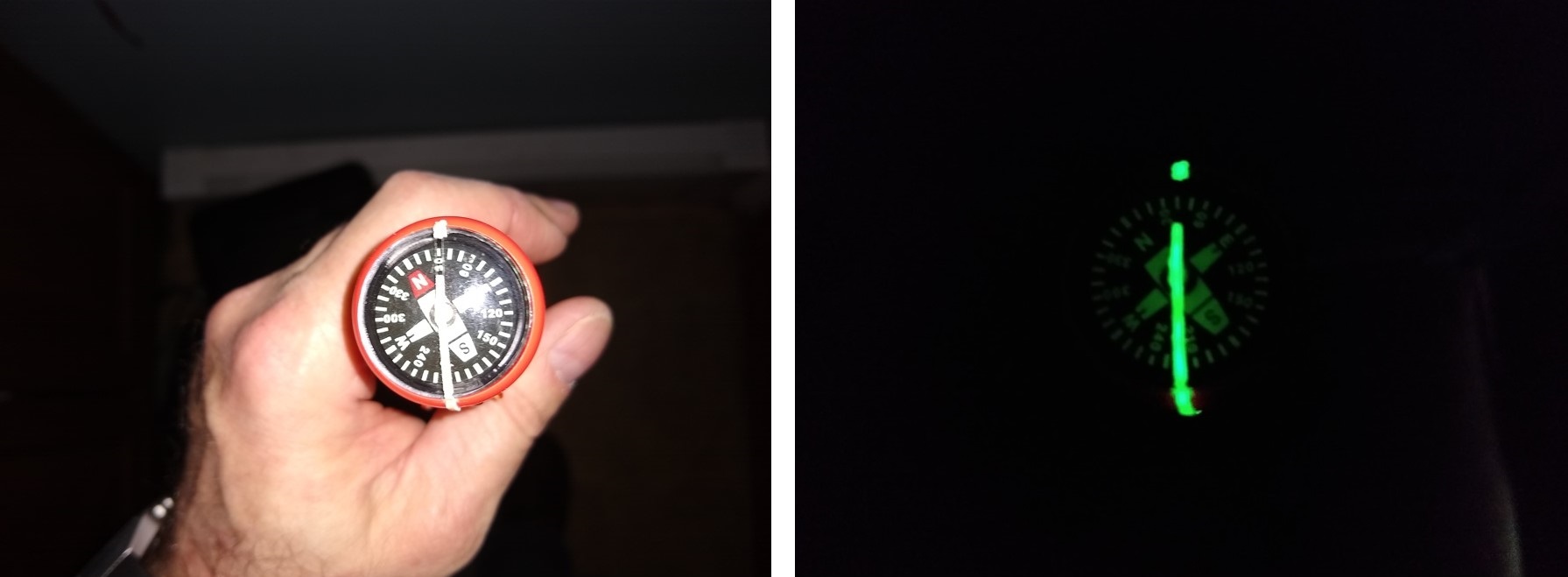
 There
were several varieties of compass match box, with a flint
There
were several varieties of compass match box, with a flint The
DuPage Path-Pilot direct reading compass2 was a
The
DuPage Path-Pilot direct reading compass2 was a


.jpg)