%20Screenshot%202026-06-20%20145717.png)

Humans have been getting lost in the
wilderness since, well, humans became humans. Today
you can buy survival kits, laminated instruction manuals, take classes and know
that most of the time you will be found alive and well within 72 hours by
rescuers, but it wasn’t always that ways.
Becoming lost in the late 18th and early 19th
centuries in the Old Northwest Frontier was a vastly different matter, with
large parts of the world unmapped and no one to find you or even to look for
you.


Daniel Boone admitted to becoming bewildered once, saying famously that “I have never been lost, but I was once bewildered for three days”.
This
is an interesting distinction between “lost”
and “bewildered”, and what he is
describing would today be known as ‘wood shock’. The steps he took to survive for three days,
while ‘bewildered’, are what kept him are what allowed him to ‘keep
his head’, not panic, and kept him from becoming ‘lost’ and perishing alone
in the wilderness.

The word ‘bewildered’ in the late 18th
and early 19th centuries had a different meaning than it does
today. Then it meant confused, lead
astray or turned around in the wilderness; like what today we would call ‘disoriented’,
the first of the five steps of ‘woods shock’.


‘Woods shock’ is
the term that psychologists use to describe the state of confusion,
bewilderment and fear that can occur when someone realizes they have become disoriented,
or ‘bewildered’. It is a
catastrophic reaction to realizing you don’t know where you are and this
intense state of confusion can lead to panic.
The fear and panic can lead victims to do
inexplicable things, like discarding gear or clothes.
Disorientation, the first step of ‘wood
shock’, is experienced when someone’s mental map fails to align with their
physical surroundings, causing them to become confused, or ‘bewildered’.
If ‘wood shock’ is not stopped at
this stage, then disorientation and bewilderment compounded by dehydration,
exhaustion, or hypothermia, can lead to fear and then panic setting in. When you panic in the wilderness, you become
‘lost’ and unfortunately being ‘lost’ usually ends in death.
The New Hampshire Lost Person Study, 1974-1979,
found that 63% of those lost during the time of the study, were hikers or
hunters who had become “disoriented” on clear, sunny days during the summer
or fall, in the late afternoon or early evening. Of those who became lost, 54% were traveling
through areas that they were familiar with, and 46% had taken a wilderness
safety class before becoming lost.

Unfortunately,
many inexperienced people and even some experienced people let their fear get
the best of them, they lose their heads and slide into ‘woods shock’ and
panic, charging past the disorientation stage, down the slippery slope to panic
and death -- and remember PANIC KILLS!

When Daniel Boone spoke
of being “bewildered for three days”,
it is obvious that he did not give into his fears and instead took positive
steps to ensure his survival, while he reoriented himself. That was why he was merely “bewildered” and not “lost”.
So if you ever find yourself bewildered and disoriented in the
wilderness, be like Daniel Boone, don’t lose your head, S.T.O.P. and stay calm.

Don’t forget to come back next week and read “Lost in Late 18th and
Early 19th centuries...Lessons Learned, Part Two©”, for more on the hard
learned survival lessons of the past.

For
more on ‘wood shock’, read “Woods Shock, Don’t Lose Your Head! ©” HERE,
“Getting Lost And What To Do About It”, Circa 1915 ©” HERE

I
hope that you continue to enjoy The Woodsman’s Journal Online and look for me
on YouTube at BandanaMan Productions for other related videos, HERE. Don’t forget to follow me on both The
Woodsman’s Journal Online, HERE,
and subscribe to BandanaMan Productions on YouTube. If you have questions, as always, feel free
to leave a comment on either site. I
announce new articles on Facebook at Eric Reynolds, on Instagram at
bandanamanaproductions, and on VK at Eric Reynolds, so watch for me.
That
is all for now, and as always, until next time, Happy Trails!
Sources
Beard Adelia Belle;
“Woodcraft for Outdoor Boys and Girls”, The Washington Reporter, February
11, 1920, page 5, https://books.google.com/books?id=SjFeAAAAIBAJ&pg=PA5&dq=%22without+maTCHES%22+1920&article_id=6504,6160930&hl=en&sa=X&ved=2ahUKEwjo5feX6aeVAxXYDHkGHYfXELsQ6AF6BAgJEAM#v=onepage&q=%22without%20maTCHES%22%201920&f=false,
accessed June 27, 2026
Gentlemen’s Lexicon; or a
Pocket Dictionary [John Grigg, Philadelphia, PA, 1835] p. 40 https://books.google.com/books?id=bqEVAAAAYAAJ&pg=PA40&dq=%22bewildered%22+lexicon+dictionary&hl=en&sa=X&ved=0ahUKEwiC94-LrtbdAhVPc98KHYO3BRMQ6AEIPjAE#v=onepage&q=%22bewildered%22%20lexicon%20dictionary&f=false,
accessed June 27, 2026
McCafferty, Keith; “Woods
Shock Can Kill”, Field & Stream, October 2006, page 40, https://books.google.com/books?id=Gv5GUqHcT8wC&pg=PA40&dq=survival+lost+woods&hl=en&sa=X&ved=2ahUKEwjO_MfT0JaBAxVbtIkEHYOdCIU4FBDoAXoECAoQAg#v=onepage&q=survival%20lost%20woods&f=false, accessed September 30, 2023
Moses,
Thomas; “The Lost Traveller”, The Analectic Magazine, Volume 4,
[published by Moses Thomas, Philadelphia, PA; 1814], page 158, https://www.google.com/books/edition/The_Analectic_Magazine/pu84AQAAMAAJ?hl=en&gbpv=1&dq=%22the+lost+Traveller%22+analectic+magazine+1814&pg=PP13&printsec=frontcover,
accessed June 27, 2026
Rosinski, Jane L.; New
Hampshire Lost Person Study, 1974-1979, New Hampshire State Fish and Game
Department, [Concord NH, 1981]
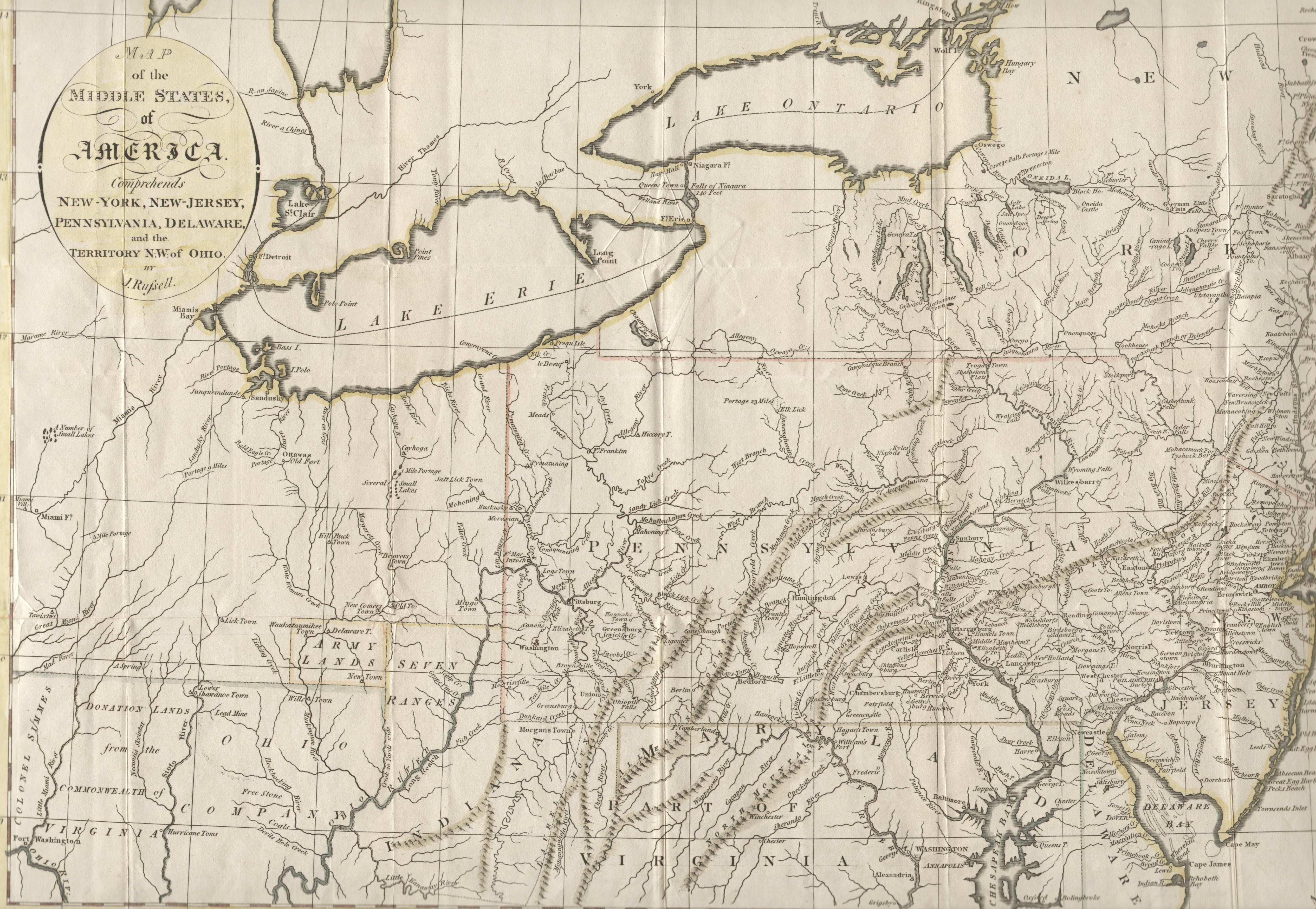
Russell, J.; “A Map Of
The Middle States, Of America”, 1794 http://www.mapsofpa.com/18thcentury/1794russell.jpg, accessed June 27, 2026
Sharp, Hal; “Sportsman’s
Digest: Start a Fire with Flint and Steel”, The News-Dispatch, September
18, 1972, page 5, https://books.google.com/books?id=02BVAAAAIBAJ&pg=PA5&dq=%22start+a+fire+with+flint+and+steel%22+1972&article_id=3452,5991692&hl=en&sa=X&ved=2ahUKEwjvnvTg7qeVAxUvpIkEHfdCPU8Q6AF6BAgIEAM#v=onepage&q=%22start%20a%20fire%20with%20flint%20and%20steel%22%201972&f=false,
accessed June 27, 2026
The
American Mountain Men; “Flint and Steel Steel Char Flint”, https://americanmountainmen.org/wp-content/uploads/2019/09/TLR-FIRE-2019-APRIL-28.pdf,
accessed June 27, 2026
White, Margaret E., Editor, A Sketch of Chester Harding, Artist: Drawn
By His Own Hand, [Houghton, Mifflin and Company, New York, 1890] p 47 to 48,
https://books.google.com/books?id=zgROAAAAMAAJ&pg=PA48&lpg=PA48&dq=%22he+had+a+very+large+progeny%22+%22chester+harding%22&source=bl&ots=I9y_v-yRI2&sig=qxwqKUR9y42naWBjhoArGJi2P5U&hl=en&sa=X&ved=2ahUKEwj4goGi7czdAhXEnOAKHWvECaoQ6AEwAHoECAUQAQ#v=onepage&q=%22he%20had%20a%20very%20large%20progeny%22%20%22chester%20harding%22&f=false, accessed June 27, 2026
Wikimedia,
“Unfinished Portrait of Daniel Boone”, https://upload.wikimedia.org/wikipedia/commons/7/79/Unfinished_portrait_of_Daniel_Boone_by_Chester_Harding_1820.jpg,
accessed June 27, 2026


%20Screenshot%202026-06-20%20145717.png)