
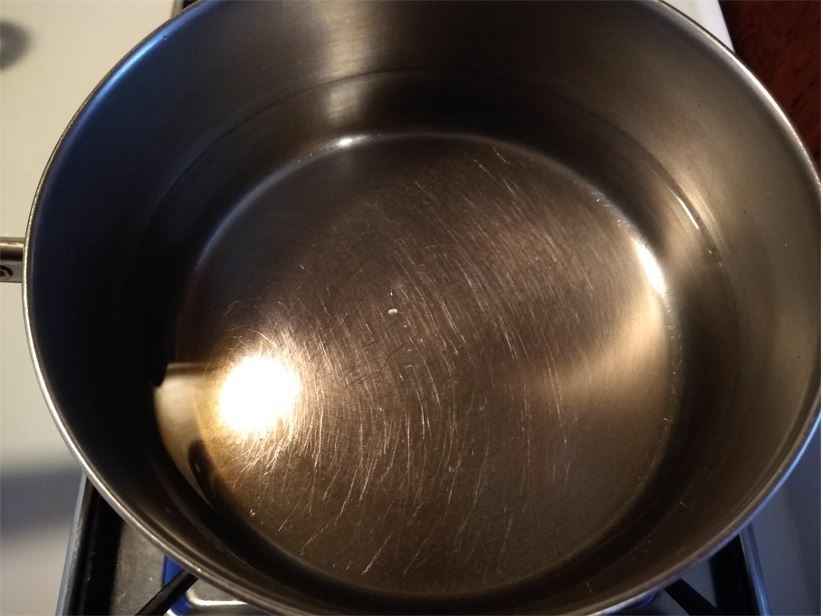
Pots and pans to boil your drinking water in, which might have been found in a late 18th or early 19th century kitchen, photograph by the Author.
Throughout all of human
history and in fact, until as recently as the very end of the 19th
and the beginning of 20th century, with the acceptance of the Germ
Theory and the establishment of municipal water facilities and the mass
disinfection of water, water borne diseases such as dysentery or diarrhea, (diseases
which were known as “bloody flux” or “quickstep”), cholera and typhoid fever (or
“camp fever”), killed thousands1.
For example, during the
American Civil War, twice as many soldiers died from illness, as died of battle
wounds. Of the illnesses, dysentery and
diarrhea were the leading cause of death, killing 45,000 out of the 2 million
soldiers serving in the Civil War, followed by typhoid fever and malaria2.
Dysentery...Bloody Flux...Cholera...Typhoid Fever...Bad
Water!

An illustration from the Field Artillery Manual, 1928, page XXX, 4-5.
Bacterial dysentery and
diarrhea are caused by shigella, campylobacter, or salmonella3
bacteria, and all of these can be found in wells, rivers and other water
sources that have been polluted with human feces. The symptoms of diarrhea are frequent and
watery stools which can cause shock and death if the body’s fluids and
electrolytes are not replaced, dysentery has the same symptoms, except with
bloody stools. It not just bad water, house
flies also can also spread these bacteria when the hairs on their legs
encounter bacteria and later, human food.
Flies also spread this disease by feeding on infected human feces and
then vomiting or defecating on human food stuffs. Amoebic dysentery is caused by the parasitic
protozoa, entamoeba histolytica, which can be found in polluted water, and has
the same symptoms as bacterial dysentery and diarrhea.

“Young man suffering from dysentery”, by Baumgartner, Abb 35, 1929, page 128, from Wikimedia, HERE.
Cholera is an acute
diarrhea with a high mortality and is caused by the bacteria vibrato cholera,
which can be found in contaminated water.
Cholera spread worldwide after 1817, due to its accidental transport in
the bilge water of ships involved in trade with the Indian subcontinent.
Typhoid fever is caused
by the salmonella typhi bacteria, and the symptoms of this disease
include a fever, headache, either constipation or diarrhea, chills and
sometimes a skin rash. It is caused by
consuming food or water that has been contaminated with feces that have been
infected with salmonella typhi bacteria.
During the American Civil War if you developed typhoid fever, you had a
one in three chance of dying, and over 30,000 soldiers in both the Union and
Confederate Armies died of it during the American Civil War4.

What has happened thousands of times from drinking bad water, “The Dance of Death”, 1493, by Michael Wolgemut, from the Nuremberg Chronicle of Hartmann Schedel, HERE.
To make it pure and wholesome...by boiling

A Spanish proverb from A New Dictionary, Spanish and English, and English and Spanish, by Captain John Stevens, 1726, page AGU to AGU.
As the Spanish proverb “água
mala hervída y coláda” or “bad water must be boil’d and strain’d” from a
1726 dictionary shows, it has been known for a long time that letting drinking
water settle or straining it and then boiling would make it wholesome or in
modern terms, disinfect it. In fact, it
was known as far back as Hippocrates5, a physician who lived in
Ancient Greece from 460 BCE to 370 BCE, and who recommended boiling and then straining
water through a cloth filter.

An excerpt from Hippocrates Upon Air, Water and Situation, Francis Clifton, M.D., page 13.
Even though Hippocrates,
whose four humors theory was influential in the development of western
medicine, recommended boiling and then straining water to disinfect it,
disinfecting water by boiling was virtually ignored by most people prior the
18th and 19th centuries.
However, by the late 18th century, with the development of the
microscope and the discovery of “animalcules” by Antonie van Leeuwenhoek
in the 1670s6 and particularly with the research into scurvy by
James Lind, boiling water to disinfect it became more and more accepted, with
various authorities beginning to recommend it.

An excerpt from A treatise on the Scurvy, John Hayman, 1791, page 18.
During the 18th and 19th
centuries, boiling drinking water was the only effective way our ancestors had
of disinfecting it, although other methods were tried...
But what about ginger...?

Historically, ginger
root, zingiber officinale, was thought to disinfect water, as shown by
Samuel Warner’s 1759 journal entry “...No soldier should Drink any water
without it Being Boild, Except he had ginger in it”. This was perhaps due to ginger’s pungent
taste and smell, which would have covered the taste and smell of bad water,
however, the active ingredients in ginger, when mixed with water do not kill
dangerous pathogens7.
Vinegar perhaps...

An excerpt from A Mental Museum, for the Rising Generation, by Jesse Torrey, Jun.; 1829, page 199-200.
During the late 18th
and early 19th centuries it was thought that by adding a little
vinegar to bad water it would make it fit for drinking. Today however, the United States
Environmental Protection Agency does not list vinegar as a water treatment that
they consider acceptable8.
Vinegar is a solution of between 5-8% acetic acid by volume, and is
mostly water, with some trace elements.
While it is true that acetic acid, in the concentrations equal to that found
in vinegar, can inhibit bacterial growth, by adding it to your drinking water and
diluting it even more, it would become ineffective.
Adding spirits or wine to it?

An excerpt from Counsel for Emigrants, and Interesting Information from Numerous Sources, 1834, pages 79-80.
While it is true that alcohol
will kill bacteria and other pathogens, according to the United States Center
for Disease Control and Prevention, to kill viruses and bacteria, the
concentration of ethanol, also known as ethyl alcohol, the type of alcohol that
we drink, must be between 60% to 90%, which leaves very little room for the
water9.
So just to be safe...

An excerpt from the Field Artillery Manual, 1928, page XXXIII, 16-18.
Today, unlike the late 18th
and early 19th centuries, there are several ways, which actually work,
to filter or disinfect water: chemicals, UV light, filtration or boiling. So, in the wilderness, if you are not
positive that your water is pure, and who can be 100% positive, and you can filter
it or disinfect it, then filter it or disinfect it10! The CDC considers
boiling water to be the best way to disinfect it. For more on water disinfection and
boiling read “Water Disinfection: When is boiled, boiled enough…? ©”, HERE, “True or False, You Should Drink Water
From The Spring Where Horses Drink?©”, HERE, and “Fire Burn and Cauldron Bubble...The
5 Stages of Boiling©”, HERE.

An excerpt from the Field Artillery Manual, 1928, page XXX, 6-7.
Don’t forget to come back
next week and read “The Top Ten Wilderness Survival Skills...Number Seven©”,
where we will talk about signaling for help!

I
hope that you continue to enjoy The Woodsman’s Journal Online and look for me
on YouTube at BandanaMan Productions for other related videos, HERE.
Don’t forget to follow me on both The Woodsman’s Journal Online, HERE, and subscribe to BandanaMan Productions
on YouTube. If you have questions, as
always, feel free to leave a comment on either site. I announce new articles on Facebook at Eric
Reynolds, on Instagram at bandanamanaproductions, and on VK at Eric Reynolds,
so watch for me.
That
is all for now, and as always, until next time, Happy Trails!
Notes
1
The first use of chlorine to disinfect water in a municipal facility was in England
in 1897, followed in the United States in Jersey City, New Jersey and Chicago,
Illinois in 1915. The filtration and
disinfection of water during the 20th century is responsible for an
almost 50% reduction in overall mortality, a 75% reduction in infant mortality and
a nearly 67% reduction in child mortality due to water borne pathogens and
illnesses.
From “John Snow, Cholera,
the Broad Street Pump; Waterborne Diseases Then and Now”, by Theodore H. Tulchinsky,
MD MPH.
2 From
“Nor Any Drop To Drink”, by Ann Chandonnet.
3
Not the salmonella that causes Typhoid Fever, according to the CDC (Centers for
Disease Control and Prevention) that is caused by caused by salmonella typhi
bacteria.
4 From
“American Civil War Disease Facts”, American Civil War Facts.
5
Hippocrates is also known as Hippocrates of Kos or Hippocrates II.
6 Animalcules
is the Latin word for “little animals”.
The word was invented by Leeuwenhoek and is an old term for microscopic
organisms that included bacteria, protozoans, and very small animals and refers
to the microorganisms he observed in rainwater.
7
“Antibacterial activity and medicinal properties of Ginger (Zingiber
officinale)”, by Samuel Malu, et al.
8
“Can Vinegar Sterilize, Disinfect, Or Purify Water?”, by Russell Singleton,
9
Center for Disease Control and Prevention, “Chemical Disinfectants”
10
“A doctor can fix giardia, but he can’t fix dead”, or “doctors can
cure a lot of things, but they can’t cure dead” is a survival refrain that
Peter Kummerfeldt teaches, and I have echoed since I first read it in
2005. When worst comes to worst, and you
are facing dehydration, drinking actually or potentially infected water is
better than not drinking any water at all.
This might seem like
common sense, however as my daughter says, “what is common sense to one
person, isn’t common sense to another; common sense only exists in the context
of your environment”. In the 1990’s
two hikers in the Grand Canyon, ran out of water and didn’t want to refill
their water bottles at a late season creek-bed pothole, teeming with tadpoles
and other life: one of the hikers later died of dehydration and the other
barely survived.
Peter Kummerfeldt is a 71
year old survival expert who graduated from the Air Force Survival Instructor
Training School and later was an instructor at the Basic Survival School, in
Spokane, Washington, in the Arctic Survival School, in Fairbanks, Alaska, and
the Jungle Survival School, in the Republic of the Philippines. Also, Peter was the Survival Training
Director for the United States Air Force Academy, Colorado Springs, for twelve
years (from Peter Kummerfeldt’s biography at “OutdoorSafe with Peter
Kummerfeldt”, found HERE)
“Canyon Missteps, Lesson:
Respect For Danger” Popular Mechanics, Volume 182, Number 8, August 2005, page
67,
Sources
American Academy of
Medicine; Bulletin of the American Academy of Medicine, Volume 7, No. 1,
June 1905, [Eschenbach Printing Company, Easton PA], page 733-734, https://books.google.com/books?id=jF49AQAAIAAJ&pg=PA734&dq=soldier+%22without+it+being+boiled%22&hl=en&newbks=1&newbks_redir=0&sa=X&ved=2ahUKEwihoKTCiof1AhUMn-AKHXJmDEMQ6AF6BAgFEAI#v=onepage&q=soldier%20%22without%20it%20being%20boiled%22&f=false,
accessed December 28, 2021
American Civil War Facts,
“American Civil War Disease Facts”, http://www.civil-war-facts.com/Interesting-Civil-War-Facts/American-Civil-War-Diseases-Facts.html,
accessed January 1, 2022
Center for Disease
Control and Prevention, “Chemical Disinfectants”, U.S. Department of Health
& Human Services, https://www.cdc.gov/infectioncontrol/guidelines/disinfection/disinfection-methods/chemical.html,
accessed August 27, 2020
Chandonnet, Ann; “Nor Any
Drop To Drink: The Problem of Drinking Water in the Civil War”, https://www.bethelhistorical.org/legacy-site/Drinking_Water_in_the_Civil_War.html,
accessed January 5, 2022
Clifton, Francis, M.D.; Hippocrates
Upon Air, Water and Situation, [Printed by J. Watts, London, 1734], page
13, https://books.google.com/books?id=a2-XlKZAIU8C&pg=PA13&dq=hippocrates+boiling+water&hl=en&newbks=1&newbks_redir=0&sa=X&ved=2ahUKEwjpipCY0efrAhUShHIEHZfSAws49AMQ6AEwBnoECAYQAg#v=onepage&q=hippocrates%20boiling%20water&f=false,
accessed September 14, 2020
Counsel for Emigrants,
and Interesting Information from Numerous Sources,
[John Mathison, Aberdeen, Scotland, 1834], page 79-80, https://books.google.com/books?id=o64NAAAAQAAJ&pg=PA79&dq=drinking+bad+water&hl=en&newbks=1&newbks_redir=0&sa=X&ved=2ahUKEwjlxsKbxLvrAhVNmuAKHeEsB9Y4sgUQ6AEwB3oECAgQAg#v=onepage&q=drinking%20bad%20water&f=false,
accessed August 27, 2020
Dorwart, Dr. Bonnie
Brice; “Disease in the Civil War”, [© 2010-2022, Virginia Center for Civil War
Studies at Virginia Tech], https://www.essentialcivilwarcurriculum.com/disease-in-the-civil-war.html,
accessed January 1, 2022
Hayman, John; A
treatise on the Scurvy, [London, 1791] page 18, https://books.googleusercontent.com/books/content?req=AKW5QadcfAbo9dRjlTPPY0n37ixcoFhRFv5kh2AWuYVVW7EccT6Xe44-tWAanYVFq0bARZyTg18ZknMnCI-wSYJ4UN5Hp8lPw4snv_zl3xraoTivPBIhs16BvgWM-7HF6a_E5YGEUivYDWhrJ3sTt_6rvorxMqsFj025ittlh0x-6yOg_WicIO3LpNOYOHevkSBBguTX7VVmzKNAVmYlVhL-_eZf0UcujmqozNQNhTTR-9LpgFNAkl_3tfeto9ZLUBd6mExfpG_pAgw5uTrNBbiNT4YjXXqGqDRP_9SiiGG29n3Z9nR0iCY,
accessed December 26, 2021
Healthline, “What Is
Dysentery and How Is It Treated?”, https://www.healthline.com/health/digestive-health/dysentery,
accessed January 1, 2022
Malu, Samuel; Obochi, G;
Tawo, E; and Nyong, Bassey; “Antibacterial activity and medicinal properties of
Ginger (Zingiber officinale)”, December 2009, Global Journal of Pure and
Applied Sciences, 15, pages 3 to 4, https://www.researchgate.net/publication/267779045_Antibacterial_activity_and_medicinal_properties_of_Ginger_Zingiber_officinale,
October 22, 2019
Stebbins, Rufus Phineas; An
Historical Address: Delivered at the Centennial Celebration of the
Incorporation of the Town of Wilbraham, June 15, 1863, [George C. Rand
& Avery, Boston], page 209, https://books.googleusercontent.com/books/content?req=AKW5QafSgltTMA_HVaYqJftE0oeb4EQ7tQfqoLAmTrt1v7HLmgG09VFzWS0lNhk0Cjhl5xJw3jHLv3gHXxrKHD-9rzUe_NGxkupsLyRSR3uXSuqN9OlYaKUK_J3LSIiK7_ZAD5tk5lmQJqBuDoZEtxiq2FbkvDr3BKiPBS8ewn7biGBbbVExrBf9mJIhPGTEPublWGqvyLJG6sD6LWxSLHhiRCPy6CbzXlEk-t7t6LX4668qe-9UMu5xyQF0W_lObGlDGJYUeGsk,
accessed January 5, 2022
Stevens, Captain John; A
New Dictionary, Spanish and English, and English and Spanish, [Printed by
J. Darby, London, 1726], page AGU to AGU, https://books.googleusercontent.com/books/content?req=AKW5QaegNfY8DOLRG_V635YDkCd5kevs-mGAc2qpTp423U13bzrVr7JeGLJyguYwR9ig1z32S1_9V8yZzyttL8DcggNaptWNtmUb0lKq-DA7kq3VgdNW58gsZTDHNuKU3P2jEBm84INm1rFEDmHIsBUUkeBgf08ji8RuQBAjRX8E-bUcPVjhiNjz6gxDVFqhMBP_oTi0oO9CwzlaRKgkcbJD_jojzeG2fzfg4RBAraXhvez8EC03Kncc61lZrl-e2E1pXEE7p_sVdeUQxnm7aKEzvQNam2f17Q,
accessed December 26, 2021
Singleton, Russell; “Can
Vinegar Sterilize, Disinfect, Or Purify Water?”, [© 2022 Copyright Water
Purification Guide], https://waterpurificationguide.com/why-you-should-never-trust-vinegar-to-sterilize-water/,
accessed January 4, 2022
Tulchinsky,
Theodore H., MD MPH; “John Snow, Cholera, the Broad Street Pump; Waterborne
Diseases Then and Now”, Case Studies in Public Health,
2018, [Elsevier Public Health Emergency Collection], pages 77–99, https://www.ncbi.nlm.nih.gov/pmc/articles/PMC7150208/pdf/main.pdf,
accessed January 1, 2022
Wikimedia, The Dance of
Death, 1493, by Michael Wolgemut, (from the Nuremberg Chronicle of Hartmann
Schedel), https://en.wikipedia.org/wiki/Danse_Macabre#/media/File:Nuremberg_chronicles_-_Dance_of_Death_(CCLXIIIIv).jpg,
accessed January 3, 2022
Wikimedia, “Young man
suffering from dysentery”, by Baumgartner, Abb 35, 1929, page 128, https://commons.wikimedia.org/wiki/File:Young_man_suffering_from_dysentery._Baumgartner,_1929_Wellcome_L0074305.jpg,
accessed January 3, 2022
Wilson, Arthur R.,
Captain, Field Artillery, U.S. Army; Field Artillery Manual, Volume One,
Third Revised Edition, [George Banta Publishing Company, Menasha, Wisconsin,
1928]




.jpg)